
See the Difference
At Cahill Works, we don't cut corners on the things you can’t see. While many tiny houses are built using standard residential or even recreational vehicle shortcuts, our homes are engineered for extreme durability, fire safety, and thermal efficiency. We prioritize high-performance materials like WUI-approved siding, integrated fire sprinklers, and comprehensive thermal breaks to ensure your home is as safe as it is functional. Use the matrix below to see how our building standards and material selections compare to the rest of the industry.
Ours Vs. Others
Certification
IRC (International Residential Code)
None, RVIA (no guarantee), or ANSI
Trailer
Iron Eagle Pad Series
100% Tub Steel, Full Welds
Not tiny house specific
C-Channel, Spot Welds or Bolts
Insulation
Rockwool: R15 walls, R25 floor, R30 ceiling
Fiberglass: R13 walls, R21 floor, R21 ceiling
Sheathing
1/2" ZIP or OSB
0.11” ThermoPLY
Thermal Break
Full protection: all trailer contact points are completely insulated
None, or subfloor protection only
Fire Sprinklers
Standard in all models
Not available or cost extra
Exterior Features
Windows
Aluminum, Tempered,
Double Pane, Argon Filled
Vinyl, not tempered
Exterior Doors
Sustainable solid Mahogany or Oak
Aluminum, hollow core
Roofing
24ga Steel PBR Panels
Aluminum or asphalt
Water Heater
Instant LP Heater
Exterior specific design
(Interior) tank or tankless
Finishing
Metal or Cedar (WUI approved), or
Cedar/Larch open jointed cladding
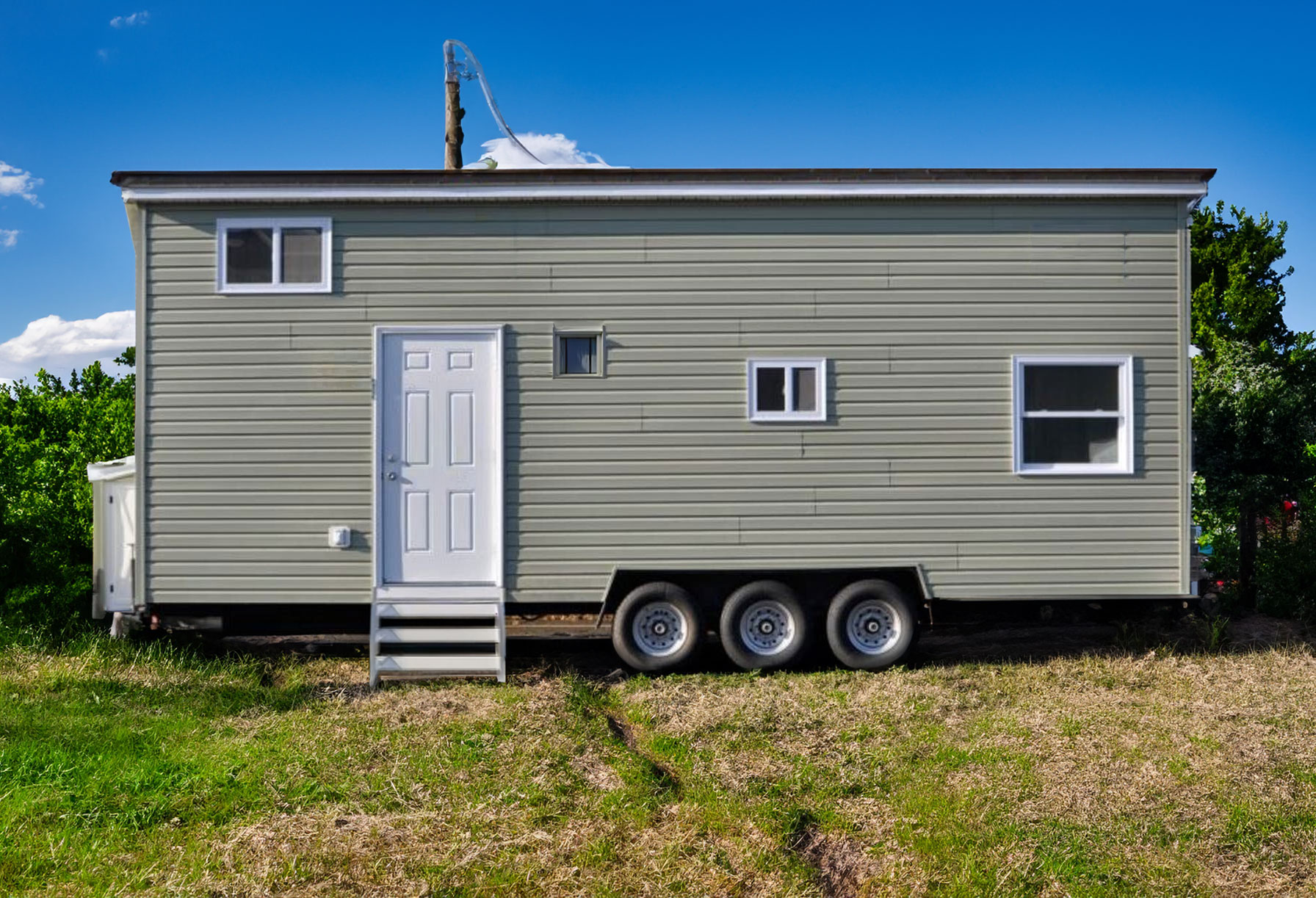
Vinyl, or treated plywood like T1-11
Utility Closet
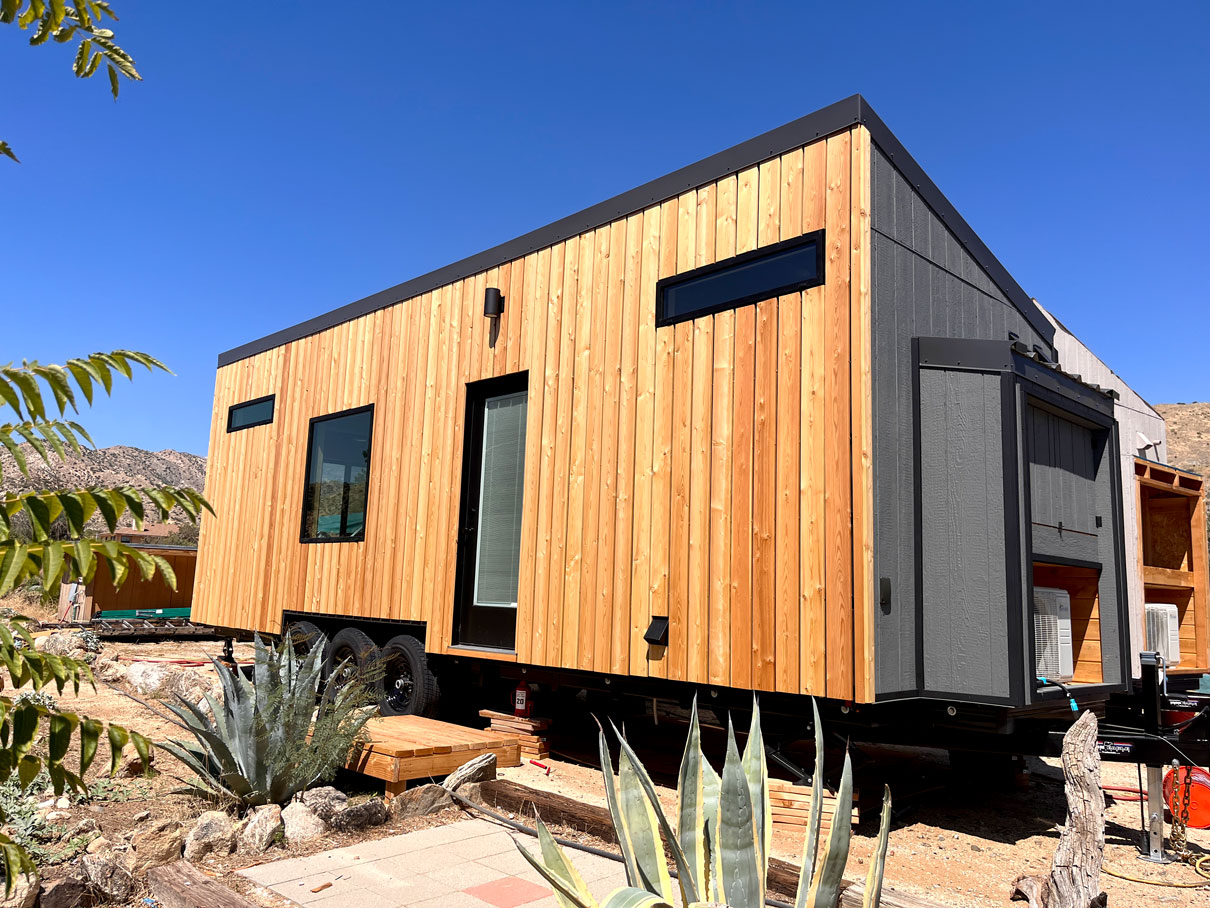
Bump-Out: integrated design to conceal utilities and provide some storage
None, mini-split on wall or trailer tongue
Electrical panel inside
Interior Features
Interior Doors
Solid core, pocket
Hollow core, hinged or barn
Walls
Tongue and groove cedar with cedar and/or birch trim
VOG or PVC panels, drywall, or MDF
Floor
Engineered hardwood plank
Vinyl Plank
Electrical Outlets
Modern 20amp with USB
Standard 15amp, no USB
Ceiling Fan
Includes light dimmer, fan speed and direction controls
None
Ventilation
Kitchen hood and humidistat in bathroom, both convey outside
None, or charcoal filter
Kitchen
Workstation sink, butcher block counter, custom cabinets
Big box stock cabinets and sink
Single Story Living
Yes
No
EXTRAS
Furniture and Appliances
Yes
No
Deck and Stairs
Yes
No
DMV Registration
Complete
None
Additional Fees
None
Yes
NOAH Certification
Cahill Works, a proud member of NOAH Certification, strives for the utmost excellence in tiny house safety and quality. As the national leader in third-party certification for tiny houses on wheels, NOAH utilizes the ANSI 119.5, the International Residential Code (IRC), and their own rigorous standards. By strictly adhering to NOAH's codes and requirements, we guarantee the very best in our tiny houses.
To learn more about NOAH, click here.
To learn more about RVIA, click here.
Trailer
Cahill Works Tiny Houses on Wheels are ingeniously built using the exceptional Iron Eagle PAD series trailers. These trailers are purposefully designed to cater to the unique needs of tiny houses, employing steel tubing as the primary component for the frame. This ensures unparalleled flatness and rigidity, even when subjected to uneven loads. The structural weight of our trailers is strategically concentrated on the outer frame, providing robust support for your walls and roof. To adhere to legal highway width limits, our trailers are intentionally crafted, accommodating the thickness of exterior siding and trim. After extensive collaboration with various trailer manufacturers, we can confidently assert that the Iron Eagle PAD series stands as the unparalleled choice.
You can learn more about Iron Eagle on their Site.
Insulation
By utilizing two types of insulation, we ensure that each component offers specific advantages. After the framing and sheathing process, we employ closed cell spray foam to seal the connection points between the sheathing and the structure, creating an impenetrable air barrier. This technique effectively prevents temperature transfer and condensation, making it an unparalleled choice. While closed cell foam is only used in a small amount for sealing, our primary insulation selection is Rockwool. Its exceptional density provides three times better sound dampening compared to other options, leaving our visitors amazed at the tranquility within our Tiny Houses on Wheels. Furthermore, Rockwool outperforms other insulation types in humid areas by allowing moisture to pass through, mitigating buildup concerns. Last but not least, its remarkable fire safety properties enable it to withstand temperatures of up to 1200 degrees. With R25-rated floors, R30-rated ceilings, and R15-rated walls, we surpass the insulation values offered by many other builders.
Sheathing
We use the best in the industry: ZIP, which is renown for it's strength, longevity, and moisture barrier properties. When ZIP is not appropriate, we opt for standard OSB that is sustainably sourced and produced without added formaldehyde. Other builders will use Thermo-PLY, which is a very thin laminated cardboard; and not appropriately used for Tiny Houses on Wheels.
To learn more about Thermo-PLY, click here.
Thermal Break
Thermal breaking is not just about energy efficiency; it is a fundamental requirement for health and safety. The steel trailer of a tiny house conducts temperature 400x faster than wood. This makes it a massive thermal bridge that pulls heat out and invites moisture in.
We address this through a multi-layered defense system. We fully line the subfloor framing with foam board insulation and fill the cavities with R-23 Rockwool to create a robust R-25 thermal barrier. To decouple the structure from the chassis, we install a specialized isolation mat between the trailer and the subfloor. This is supplemented by sill seal at the base of the wall framing.
However, insulation alone is not enough. Without a complete thermal break, the bolts that secure your walls and floor to the trailer carry cold directly into the home’s skeleton. This triggers condensation at the fastener points, creating a hidden, moist environment where mold thrives. Our design ensures these critical contact points, including the fasteners, are fully isolated. This protects your home from the rot and respiratory hazards that destroy standard builds.
To learn more about our thermal break and floor system, you can watch this video.
Fire Sprinklers
California building codes now require fire sprinkler systems in new residential structures, including many Accessory Dwelling Units (ADUs). To ensure our homes meet these rigorous standards, we collaborated with an internationally recognized engineering firm to design an NFPA-approved system specifically for our tiny houses on wheels. Whether your local jurisdiction requires them or not, these systems provide a critical layer of protection for both the occupants and the structure. Incorporating fire sprinklers into your build is a proactive choice that increases the safety, compliance, and long-term value of your investment.
Windows
We use aluminum windows with a black Kynar finish. These windows offer a slim, modern profile without becoming faded or warped like vinyl. While aluminum is naturally conductive, these windows are engineered with a dedicated thermal break to act as a barrier against heat transfer. This ensure the frame maintains energy efficiency and structural integrity even in harsh climates. The glass package is equally important: we use an argon-filled chamber between the panes to minimalize thermal passage. Beyond the performance, these windows provide the look and feel expected of a Cahill Works Tiny House on Wheels.
Exterior Doors
We offer sustainably sourced Mahogany doors, manufactured locally, to provide a high-end, secure entry point for your home. These are fully customizable: we can install clear or frosted glass in large or small panel configurations depending on your preference for natural light and privacy. The rich, warm tones of the Mahogany wood add a touch of sophistication that standard exterior doors cannot match.
For those prioritizing utility and light control, we also offer fiberglass doors featuring flush glazing with integrated mini-blinds or shades. These remain protected between the glass, keeping them out of the way during operation. Additionally, we provide vented door options to increase airflow without compromising security. Whether you prefer the architectural look of custom wood or the low-maintenance practicality of a vented fiberglass unit, we ensure your entryway is a significant upgrade over the thin steel slabs typically found in the industry.
Roofing
We use 24-gauge steel roofing installed with NOAH-prescribed fastener spacing, exceeding both international building codes and standards for hurricane-prone areas. While many builders only apply underlayment to the edges or "critical" zones, we provide 100% coverage across the entire roof deck using Sharkskin Ultra. This premium underlayment acts as a continuous water and ice shield, offering a 50-year warranty and total protection against ice dams in severe climates.
Our roofs are engineered to perform for half a century, likely outlasting the structure itself. We strictly avoid asphalt shingles or rolled-on asphalt products. These materials are unsuitable for tiny houses as they fail prematurely under the stresses of transport and temperature fluctuations. By utilizing high-spec steel and full-surface synthetic shielding, we ensure the building envelope remains impenetrable regardless of the environment.
Water Heater
We utilize exterior-mounted LP (Liquid Propane) instant water heaters to maximize both safety and efficiency. By opting for propane, we dramatically reduce the electrical load on the tiny house. An LP unit requires a mere tenth of an amp for ignition, whereas electric tankless heaters can pull between 125 and 150 amps. Even traditional tanked electric heaters demand 30 amps or more. By offloading this high-demand task to propane, our homes function perfectly on a 50-amp panel—or even a 20-amp breaker—allowing a 12,000 BTU mini-split, LED lighting, and fans to run simultaneously without risk of tripping breakers.
Safety is our primary driver for mounting these units outdoors. Housing the combustion of gases outside the home eliminates the risks associated with indoor LP connections or rare leaks. We advocate for placement in non-enclosed areas as a critical precaution; compromising safety for a lower-cost indoor alternative is never advisable. Furthermore, this exterior placement preserves the interior aesthetic. You will not find exposed water heaters or unsightly PEX tubing in our bathrooms, a common shortcut observed in many other builds.
Exterior Finishing
The clean lines of our homes are the result of choosing materials that balance aesthetics with extreme durability. We prioritize WUI-approved (Wildland-Urban Interface) siding to ensure our builds meet the highest fire-safety standards. Our primary offerings include properly approved metal and cedar siding, which provide superior protection in fire-prone areas without sacrificing the modern look we are known for.
Our choice of sheathing depends entirely on the siding application. For metal siding, we use ZIP System sheathing: widely considered the best in the industry, it provides an integrated air and water barrier. However, for specific custom applications like open-joint cladding that require different weather-resistant barriers, we utilize high-quality OSB.
While we lead with WUI-approved materials, we still offer our signature open-jointed larch or cedar cladding for custom projects. This system acts as an integrated water management tool, allowing for faster drainage and improved airflow behind the boards. Our installation for these projects is meticulous. We apply a specialized house wrap designed specifically for rainscreens (complete with a 25-year warranty) and install 1/2-inch battens to separate the wood from the structure. This creates a dedicated air gap that prevents moisture traps. Finally, the cladding is secured using semi-hidden fasteners for a seamless, structural finish.
Bump-Out Utility Closet
The look of exposed utilities is an unsightly sore on any home design, and there is no exception to tiny houses on wheels! We choose to include in all our models a bump-out utility closet that houses the HVAC (mini-split), electrical panel, and instant hot water heater. The bump-out is finished to match the tiny house which creates a seamless addition to the use of space.
Interior Doors
We utilize solid core doors exclusively for the interior of our tiny houses. Our standard is a solid white oak door, providing a heavy, high-quality feel and natural wood grain. For custom builds, we also offer a full frosted glass panel door. This sandblasted glass permits natural light from the main living space to enter smaller rooms while maintaining complete privacy.
We exclusively employ pocket-style hanging mechanisms for our interior doors, preferring them over barn or hinged door systems. Pocket doors offer superior space utilization compared to hinged doors, which require a significant swing radius. While barn doors are a popular trend, they offer minimal sound or light containment because they do not align flush with the wall when closed. Moreover, barn doors occupy valuable wall space that could otherwise be used for furniture or storage. While other builders commonly opt for cheaper hollow core doors with quicker installation using hinged or barn-style methods, we prioritize functionality and longevity through the deliberate selection of solid core, pocket-style systems.
Interior Walls
Choosing the right interior wall material is a matter of both longevity and air quality. We prioritize tongue and groove cedar planks for their natural durability and distinct aroma. We also utilize Baltic Birch, which is an imported, furniture-grade plywood that represents the absolute pinnacle of quality. The multi-core construction of Baltic Birch offers a clean, contemporary aesthetic and a level of structural stability that standard domestic plywood cannot match.
For custom builds where full cedar may not be the ideal choice, we offer several pine options including knotty pine or blue pine. These materials provide a robust, long-lasting surface that adds structural integrity to the home. In contrast, we strictly avoid drywall. While it is a cheaper and faster installation method, it is fundamentally unsuitable for a mobile structure. Drywall is prone to cracking, popping seams, and fastener failure during transit. It is also highly susceptible to water damage, which leads to warping, discoloration, and mold. By choosing high-spec wood products over drywall, we ensure superior acoustic properties and a building envelope that remains intact for the life of the home.
Flooring
At Cahill Works, our priority is using natural materials with zero to minimal VOCs. Like our walls, countertops, and built-ins, we believe real wood creates an unparalleled living environment. Flooring is no exception. While we have traditionally utilized engineered maple plank flooring, we are now aiming for solid hardwood as our preferred standard. Solid wood offers a depth of character and a lifespan that engineered products cannot match, allowing for refinishing and aging that tells the story of the home.
In contrast, many other tiny houses opt for Luxury Vinyl Plank (LVP) flooring, which is notorious for being the least eco-friendly choice available. LVP releases harmful volatile organic compounds into the living space for years. This results in both an unpleasant chemical odor and a physically toxic environment. We take pride in excluding these detrimental products from our tiny homes. It is simply not the right choice for those who value a healthy, natural, and high-quality living environment.
Outlets
Each outlet within our tiny houses is wired to accommodate a 20 amp connection, surpassing the standard 15 amp wiring and receptacles typically found in cheaper installations. In our pursuit of enhanced aesthetics, every outlet is equipped with a decorator-style receptacle featuring a screwless faceplate. Moreover, our non-GFCI receptacles are furnished with USB Type-A and Type-C high-speed charging capabilities.
In strict adherence to code compliance and safety, our kitchen, bathroom, and outdoor outlets are equipped with GFCI connections. Our commitment to NOAH certification mandates the inclusion of two dedicated 20 amp GFCI kitchen outlets above the counter, along with a 20 amp GFCI beneath the cooktop. Additionally, a dedicated 20 amp GFCI is provided for those considering the replacement of a standard toilet with an electric or gas incinerating toilet.
Further aligning with NOAH requirements, a weather-rated 20 amp GFCI outlet is strategically positioned outside the trailer, situated near the bump out. Each meticulous choice, including outlet specifications, reflects our unwavering dedication to delivering an exceptionally superior end product.
Ceiling Fan
Proper air circulation is critical in a tiny house, especially given the high-performance Rockwool insulation. Without movement, heat can become trapped in lofts or stagnant in bedrooms. To address this, we install high-efficiency, low-profile ceiling fans in our primary sleeping areas.
Venting
In a tiny house, air control is a critical structural requirement. Because these spaces are small and highly insulated, moisture and cooking fumes build up rapidly. Without aggressive venting, a home is susceptible to black mold, mildew, and respiratory hazards. We utilize a three-point mechanical strategy to ensure the air remains dry and filtered.
Our first line of defense is smart bathroom ventilation. We install bathroom fans equipped with integrated humidity sensors that activate automatically when they detect moisture. This eliminates the risk of human error and prevents the localized humidity spikes that lead to structural rot. We supplement this with high-CFM kitchen exhaust fans. Cooking in a small footprint introduces significant volumes of grease and steam, so we use powerful fans to effectively expel these pollutants before they can settle into the fabrics and finishes of the home.
The primary tool for maintaining a moisture-free environment is the mini-split heat pump. Unlike indoor propane heaters or gas ranges which introduce substantial moisture into the air, the mini-split functions as a powerful dehumidifier. By providing electric heating and cooling, the system constantly conditions the air and pulls out excess dampness. Many subpar builds completely disregard these systems, often lacking humidity sensors, ignoring kitchen exhaust entirely, or relying on unvented gas appliances. Without the proper mechanical venting we provide, those structures are prone to a limited lifespan and expensive, preventable repairs.
Kitchen
We have curated our kitchen designs to combine modern aesthetics with long-term adaptability. Our cabinetry is selected for its sleek appearance and modular features, allowing us to create layouts that are specifically tailored to each customer. To supplement these systems, we integrate custom shelving made from imported Baltic Birch. This furniture-grade material offers a clean, contemporary look and superior structural stability, ensuring your storage solutions are as durable as they are functional. These choices also provide the advantage of easy repair or modification in the long run, which is a significant benefit over the fixed, low-quality cabinetry found in many other builds.
Our kitchens feature a high-end workstation sink designed to maximize efficiency and maintain a clean food prep zone in a compact footprint. Each unit is equipped with a two-burner induction cooktop. The black ceramic surface is easy to clean and delivers instant heat, significantly reducing cooking time compared to traditional electric or gas alternatives. This is complemented by a high-CFM exhaust hood that effectively vents cooking fumes to the outside. To finish the space, we typically install thick, full-wood butcher block countertops that match the interior ambiance of the home.
For custom builds, we are happy to work with a variety of other high-performance materials. We offer options for specialized laminates and modern composites to meet specific aesthetic or durability requirements. Unlike many competitors who rely on discount cabinets and stock appliances from big-box retailers, we prioritize size, design, and material grade. Whether in our Scandinavian or Studio models, the kitchen is built to surpass expectations through the use of high-spec induction technology, powerful ventilation, and premium surfaces tailored to your project.
Lofts
We prioritize the safety and comfort of our tiny houses. While lofts may not be suitable for everyone, especially those with mobility issues or young children, we have made a conscious decision not to include them in our designs. Our primary concern is to provide a secure environment for those looking to rent their ADU or use it as a guest house for family and friends. Additionally, by keeping the sleeping area on the main floor, we ensure a seamless flow and optimal utilization of space in our tiny houses. This strategic approach not only guarantees an excellent living experience but also allows for the natural flow of air and light, enhancing the overall ambiance.
If you are interested in having a loft, we are pleased to explore the option of incorporating one into your custom tiny house. While we can easily add storage lofts, it is important to note that they cannot be approved as sleeping areas. Our commitment to safety and creating the best environment for your tiny house leads us to refrain from building lofted bedrooms. We believe there are safer options that better serve the overall purpose of your tiny house.